



Potassium Channel
KcsA
Potassium channels are the most widely distributed type of ion channel and are found in virtually all living organisms. They form potassium-selective pores that span cell membranes. Potassium channels are found in most cell types and control a wide variety of cell functions. Potassium channels function to conduct potassium ions down their electrochemical gradient, doing so both rapidly and selectively. Biologically, these channels act to set or reset the resting potential in many cells. In excitable cells, such asneurons, the delayed counterflow of potassium ions shapes the action potential. By contributing to the regulation of the action potential duration in cardiac muscle, malfunction of potassium channels may cause life-threatening arrhythmias. Potassium channels may also be involved in maintaining vascular tone.
All Product Categories
-
Potassium Channel Inhibitors
(685)
View all products
-
Potassium Channel Agonists
(31)
View all products
-
Potassium Channel Antagonists
(39)
View all products
-
Potassium Channel Activators
(241)
View all products
-
Potassium Channel Modulators
(44)
View all products
-
Potassium Channel Chemical
(1)
View all products
-
Potassium Channel Controls
(11)
View all products
-
Potassium Channel Related Products (1146)
Related Products (1146)

-
Antibodies (6)
-
Related Compound Screening Libraries (1)
-
Glisoxepide
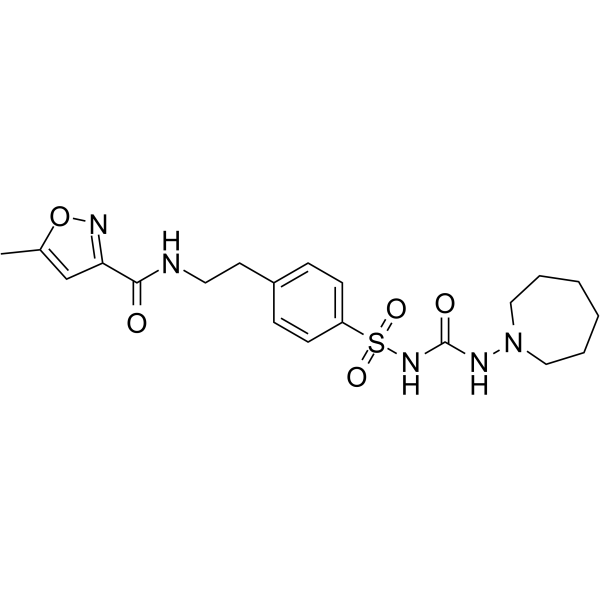 0 ImagesCat. No.: HY-A0176CAS No.: 25046-79-1Glisoxepide, a sulphonamide derivative, is an orally available nonselective K(ATP) channel blocker, with antihyperglycemic activity and cardiovascular regulation effect.
-
Nicorandil-d4
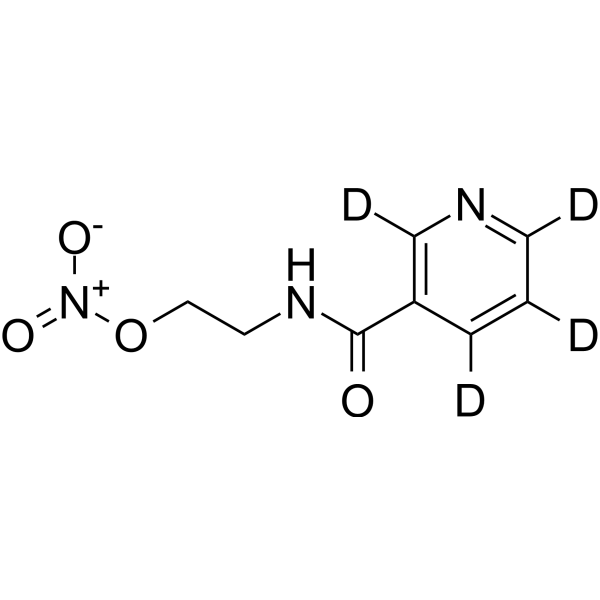 0 ImagesNicorandil-d4 (SG-75-d4) is the deuterium labeled Nicorandil. Nicorandil (SG-75) is a potent potassium channel activator and targets vascular nucleoside diphosphate-dependent K+ channels and cardiac ATP-sensitive K+ channels (KATP). Nicorandil is a nicotinamide ester with vasodilatory and cardioprotective effects and has the potential for angina and forischemic heart diseases.
-
Diazoxide (Standard)
 0 ImagesSynonyms: Sch-6783 (Standard); SRG-95213 (Standard)Diazoxide (Standard) is the analytical standard of Diazoxide. This product is intended for research and analytical applications. Diazoxide (Sch-6783) is an ATP-sensitive potassium channel activator, has the potential for hyperinsulinism treatment.
-
Cereulide
 0 ImagesCat. No.: HY-P3003CAS No.: 157232-64-9Cereulide is an orally active, blood-brain barrier-permeable emetic toxin. Cereulide acts as a potassium ionophore that inserts into membranes, forms complexes with K+, and transports K+ from the cytoplasm into the mitochondrial matrix. Cereulide disrupts the electrochemical gradient of the inner mitochondrial membrane, leading to mitochondrial swelling and dysfunction, uncoupling of oxidative phosphorylation, inhibition of ATP synthesis, ROS accumulation, and ultimately triggering apoptosis and autophagy. Cereulide exhibits multi-organ toxicity and can be used for research on emetic food poisoning.
-
Isopropyl unoprostone
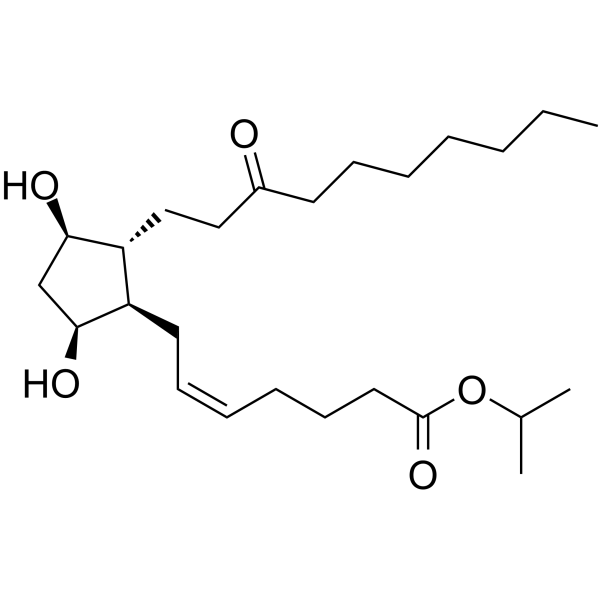 0 ImagesCat. No.: HY-109545CAS No.: 120373-24-2Synonyms: Unoprostone isopropyl ester; UF-021Isopropyl unoprostone (Unoprostone isopropyl ester), an analogue of a prostaglandin metabolite, is a potent large conductance Ca2+-activated K+ (BK) channels activator. Isopropyl unoprostone has antiglaucoma effects, lowering intraocular pressure (IOP) by increasing aqueous humour outflow. Isopropyl unoprostone can improve retinal sensitivity and the protection of central retinal sensitivity.
-
BAPTA-AM (Standard)
 0 ImagesBAPTA-AM (Standard) is the analytical standard of BAPTA-AM. This product is intended for research and analytical applications. BAPTA-AM is a well-known membrane permeable Ca2+ chelator. BAPTA-AM inhibits hERG channels, hKv1.3 and hKv1.5 channels in HEK 293 cells with IC50s of 1.3 μM, 1.45 μM and 1.23 μM, respectively.
-
Minoxidil-d10
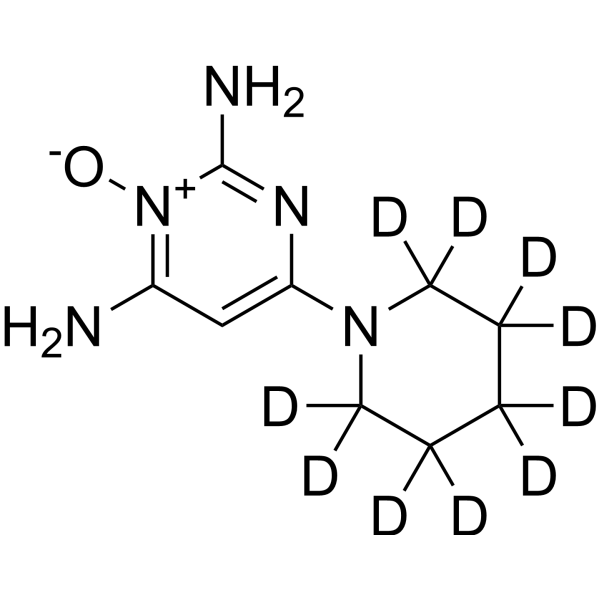 0 ImagesMinoxidil-d10 (U10858-d10) is the deuterium labeled Minoxidil. Minoxidil (U10858) is an ATP-sensitive potassium (KATP) channel opener, a potent oral antihypertensive agent and a peripheral vasodilator that promotes vasodilation also affects hair growth. Minoxidil is also a potent inhibitor of soybean lipoxygenaseare with an IC50 of 20 μM[1][2][3].
-
Lidoflazine
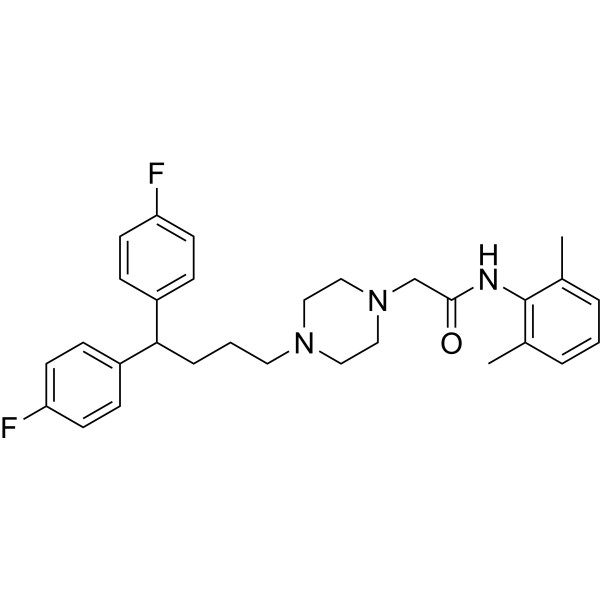 0 ImagesLidoflazine is a high affinity blocker of the HERG (human ether-a-go-go-related gene) K+ channel. Lidoflazine is an antianginal calcium channel blocker that carries a significant risk of QT interval prolongation and ventricular arrhythmia.
-
VU6032735
 0 ImagesCat. No.: HY-175728Purity: 99.26%VU6032735 is a potent and subtype-selective sperm-specific potassium channel 3 (SLO3) inhibitor with IC50 values of 165 nM (hSLO3) and 730 nM (mSLO3). VU6032735 also inhibits sodium channel and L-type calcium channel VU6032735 can sustain high tissue exposure in the fertilized oviduct. VU6032735 can be used for the research of contraception.
-
W-7
 0 ImagesW-7 is a selective calmodulin antagonist. W-7 inhibits the Ca2+-calmodulin-dependent phosphodiesterase and myosin light chain kinase with IC50 values of 28 μM and 51 μM, respectively. W-7 induces apoptosis and has antitumor and vascular relaxing activity. W-7 is a blocker of Kv4.3 and can be used for research of arrhythmias.
-
Ssm spooky toxin TFA
 0 ImagesCat. No.: HY-P5925ASynonyms: SsTx Toxin TFASsm Spooky Toxin TFA is found in Scolopendra mutilans that potently inhibits KCNQ (voltage-gated potassium channel family 7) channels, with IC50s of 2.8 μM, 5.26 μM and 0.1-0.3 M for Kv7.4, Kv1.3, and Shal channel, respectivily. Ssm Spooky Toxin TFA inhibits cytokine generation by specifically acting on the KV1.3 channel in T cells. Ssm Spooky Toxin TFA plays an essential role in the centipede’s circulatory system .
-
RL648_81
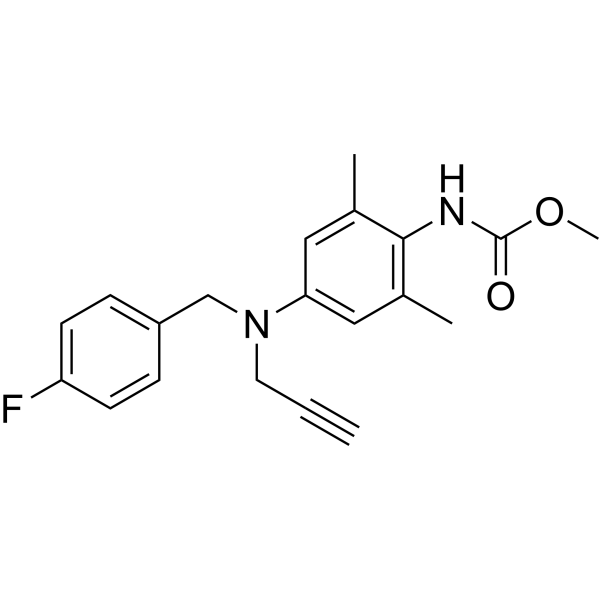
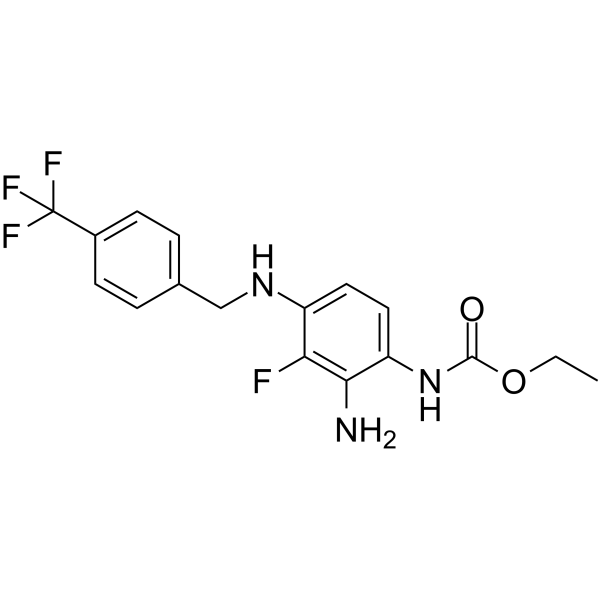 0 ImagesRL648_81 is a specific KQT-like subfamily 2/3 (KCNQ2/3) activator with an EC50 of 190 nM. RL648_81 robustly shifts the V1/2 of KCNQ2/3 channels towards hyperpolarized potentials.RL648_81 does not shift the V1/2 of either KCNQ4 or KCNQ5.RL648_81 has?the?potential?for?neurologic disorders associated with neuronal hyperexcitability research.
-
LY3972406 hydrochloride
 0 ImagesLY3972406 hydrochloride is a kv1.3 potassium channel inhibitor without affecting hERG channel activity. LY3972406 hydrochloride hydrochloride can be used in research of immune-related diseases such as psoriasis, rheumatoid arthritis, and systemic lupus erythematosus.
-
AVE1231
 0 ImagesSynonyms: A293AVE1231 (A293) is a dual-pore potassium channel TASK-1 inhibitor. AVE1231 blocks carbamoylcholine chloride (HY-B1208)-activated IKACh (IC50=8.4 μM). AVE1231 can be used in the study of arrhythmias and atrial fibrillation.
-
HsTX1 TFA
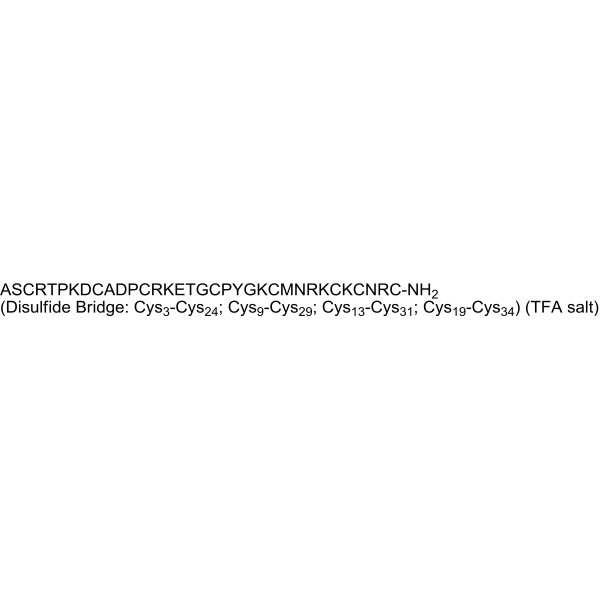 0 ImagesCat. No.: HY-P5182APurity: 99.73%HsTX1 (TFA) toxin, from the scorpion Heterometrus spinnifer, is a 34-residue, C-terminally amidated peptide cross-linked by four disulfide bridges. HsTX1 (TFA) is an the inhibitor of potassium channel, with IC50 for Kv1.3 of 12 pM and inhibits TEM cell activation and attenuates inflammation in autoimmunity.
-
Isopimaric acid
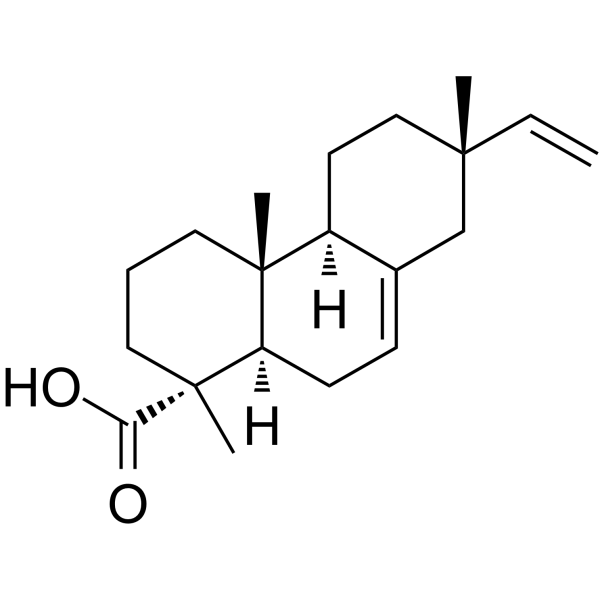 0 ImagesIsopimaric acid is a coniferous tree defense compound. Isopimaric acid binds to AKT and inhibits mTOR phosphorylation, thereby regulating the AKT/mTOR pathway. Isopimaric acid inhibits oxidative stress, inflammation, microglial migration, apoptosis, autophagic flux, ornithine decarboxylase activity, breast cancer proliferation and metastasis, and fungal spore germination. Isopimaric acid also induces M2 microglial polarization, mitochondrial damage, ROS accumulation, starvation-induced colon cancer cell apoptosis, and breast cancer cell cycle arrest. Isopimaric acid activates potassium channels, regulates sodium channels and calcium channels, reduces myocardial excitability, and improves arrhythmia. Isopimaric acid acts as an oxidative substrate for CYP6BW1/3, down-regulates PINK1/Parkin, and regulates calcium homeostasis, oxidative phosphorylation, EMT, and the Wnt pathway. Isopimaric acid exhibits activity against drug-resistant Staphylococcus aureus, repels feeding, and promotes the growth of rice seedlings. Isopimaric acid is suitable for research related to epilepsy, tumors, drug-resistant bacterial infections, atrial fibrillation, hypertension, hyperlipidemia, pulmonary tuberculosis, etc.
-
Bepridil
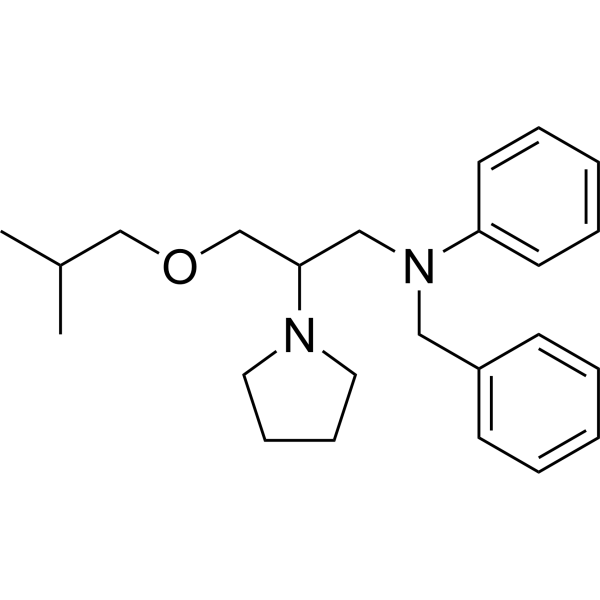 0 ImagesSynonyms: CERM 1978 free base; Org 5730Bepridil (CERM 1978 (free base); Org 5730) is an orally active non-selective calcium channel antagonist with multi-ion channel blocking activity. Bepridil modulates Calmodulin, the 20S proteasome, T-type/L-type calcium channels, cardiac sodium channels, multiple potassium channels, γ-secretase, β-secretase, and mitoKATP/sarcKATP channels. Bepridil acts as a hydroxyl radical scavenger, regulates mitochondrial and intracellular calcium handling, and exerts antiarrhythmic, antianginal, and cardioprotective effects. Bepridil alters amyloid precursor protein processing, reduces β-amyloid and thalamic calcium levels, restores seladin-1/DHCR24 expression, and improves sensorimotor recovery after cerebral ischemia. Bepridil also exhibits potent inhibitory effects on SARS-CoV-2 replication. Bepridil is used in studies related to stable angina, arrhythmias, cerebral ischemia, Alzheimer's disease, and SARS-CoV-2 infection.




